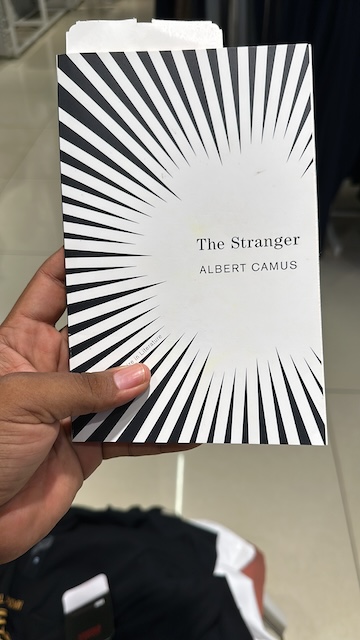
This is a book about a man, Meursault, who doesn’t care. This is the first line:
“Maman died today. Or yesterday maybe, I don’t know.”
He doesn’t even know when his mother dies. It starts with him attending his mother’s funeral in a home he sent her to. There he meets all the people that her mother interacted with. He is strikingly emotionally detached. He immediately gets back to work. When his boss asks about his mother’s age, he says “About sixty”. He gets into a relationship the day after the funeral and goes to watch comedy with her. The neighbours worry about him but he clearly shows no emotions.
He passively drifts through life observing other humans from a far, his house window while smoking. Meursault ends up killing a man on the beach, he had no personal issues with the man. This murder was very senseless.
“It was then that I realized you could either shoot or not shoot.”
His murder trial becomes a scrutiny of his lack of remorse, particularly his behaviour during his mother’s death. This lack of grief becomes the real crime in court.
“I had this stupid urge to cry, because I could feel how much all these people hated me.”
Many testify that he showed no emotion during the funeral, an example was him offering someone a cigarette. When the judge asks him for a reason for his action, he blames the sun.
The book from my view seems to show us someone who has accepted that life is meaningless contrary to how many struggle to attach meaning to life. His alienation from friends, society and even his emotions making him the stranger. He has found freedom in the acceptance of life’s meaninglessness and ultimately finds acceptance of death.
“I opened myself to the gentle indifference of the world. Finding it so much like myself—so like a brother, really—I felt that I had been happy and that I was happy again.”
This is a really good read and cries for another read.
 britone mwasaru